

The 2-3 Zone Defense — A Junior Coaching Guide
The 2-3 zone is a widely used defense in junior basketball. It can be very difficult to score against, especially if the offence has no strong outside shooters. Two guards position themselves near the top of the key, while three players (the forwards and center) spread out across the baseline.
How It Works 🏀
Each defender guards an area of the court rather than a specific player. As the ball moves, the entire zone shifts to protect the ball-side while keeping the keyway congested.
Benefits
- 🏰Driving to the basket is difficult — bigger players are already positioned to contest any lay-up attempts inside the key.
- 🏀Rebounders are perfectly positioned to crash the defensive boards — three players are already near the basket.
- 🎯Forces outside shots — a huge benefit if the opposing team are poor shooters from distance.
Downsides
- ⚠️Teams that can pass quickly and shoot well can really punish the 2-3 zone, especially from the corners and the free throw line.
- 📋The 2-3 zone is often not allowed in younger age groups — always check your league rules before implementing.
Key Concept #1: Forwards Must Not Get Trapped 🪤
One of the biggest mistakes in a 2-3 zone is when a forward gets stuck behind the post player. If the ball swings to the wing and the forward is still sealed underneath, the wing player gets a wide-open look.
- 🪤The forward must stay in front of their zone — never let the offensive post player pin you behind them. Fight over the top or step around early.
- 👁️Watch the animation — when the forward gets stuck, the wing player on the baseline becomes completely unguarded. That's an easy basket!
- 📣Communication is everything — the center and guards must call out when a forward is getting sealed so they can help rotate.
Key Concept #2: Guard the Keyway Cuts ✂️
A common mistake in zone defense is being too static. When an offensive player cuts through the keyway, the zone must temporarily switch to man-to-man principles — you can't just let a player walk through the middle unchallenged!
- ✂️When a player cuts through the key, the nearest defender must actively deny the pass — not just stand in their zone watching.
- 🔄The zone temporarily becomes more like man-to-man inside the key. Players must bump and body the cutter until they exit, then reset to their zone positions.
- ⚡Quick feet and active hands are essential. Too often young players just stand flat-footed — teach them to move their feet and contest every pass into the key!
Key Concept #3: Center Covers the Baseline 🛡️
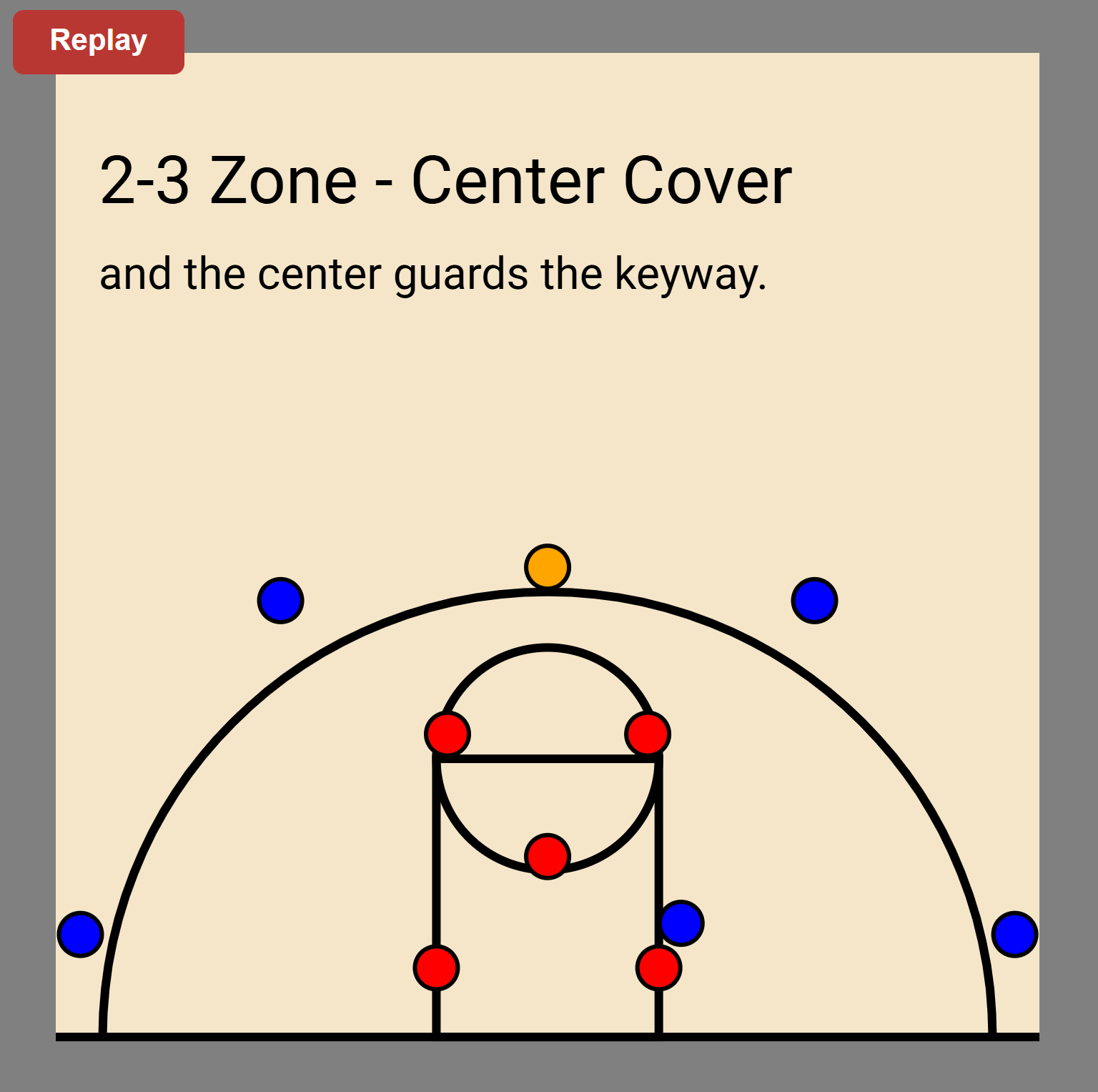
When the ball moves to the wing and the forward moves out to contest, the center must slide across to cover the baseline. If nobody fills this gap, the offence gets a free pass to a player right under the basket.
- 🛡️As the forward steps out to the wing, the center must immediately slide across to cover the vacated baseline area. The red arrow shows this rotation.
- 🏃The center's job is constant movement — sliding from side to side as the ball swings. It's the hardest and most important role in the 2-3 zone.
- 💪Put your most athletic big player in the center spot. They need quick lateral movement and the ability to contest shots at the rim.
Other Important Tips
- 📣The forwards must talk! They are critical in communicating to the center and guards what's happening behind them. Good defence starts with good communication.
- 🖐️Active hands in passing lanes — zone defenders should always have their hands up and ready to deflect or intercept passes. One deflection can disrupt an entire offensive possession.
- 🏃Move on the pass, not the catch. The zone should shift while the ball is in the air — if you wait until the catch, you're already too late.
In Summary
1. Two guards at the top, three players across the baseline — each guarding an area, not a player.
2. Forwards must stay in front of their zone — never get pinned behind the post.
3. Guard keyway cuts actively — switch to man-to-man inside the key.
4. The center slides to cover the baseline when the forward goes out to the wing.
5. Communication is everything — talk, talk, talk!